
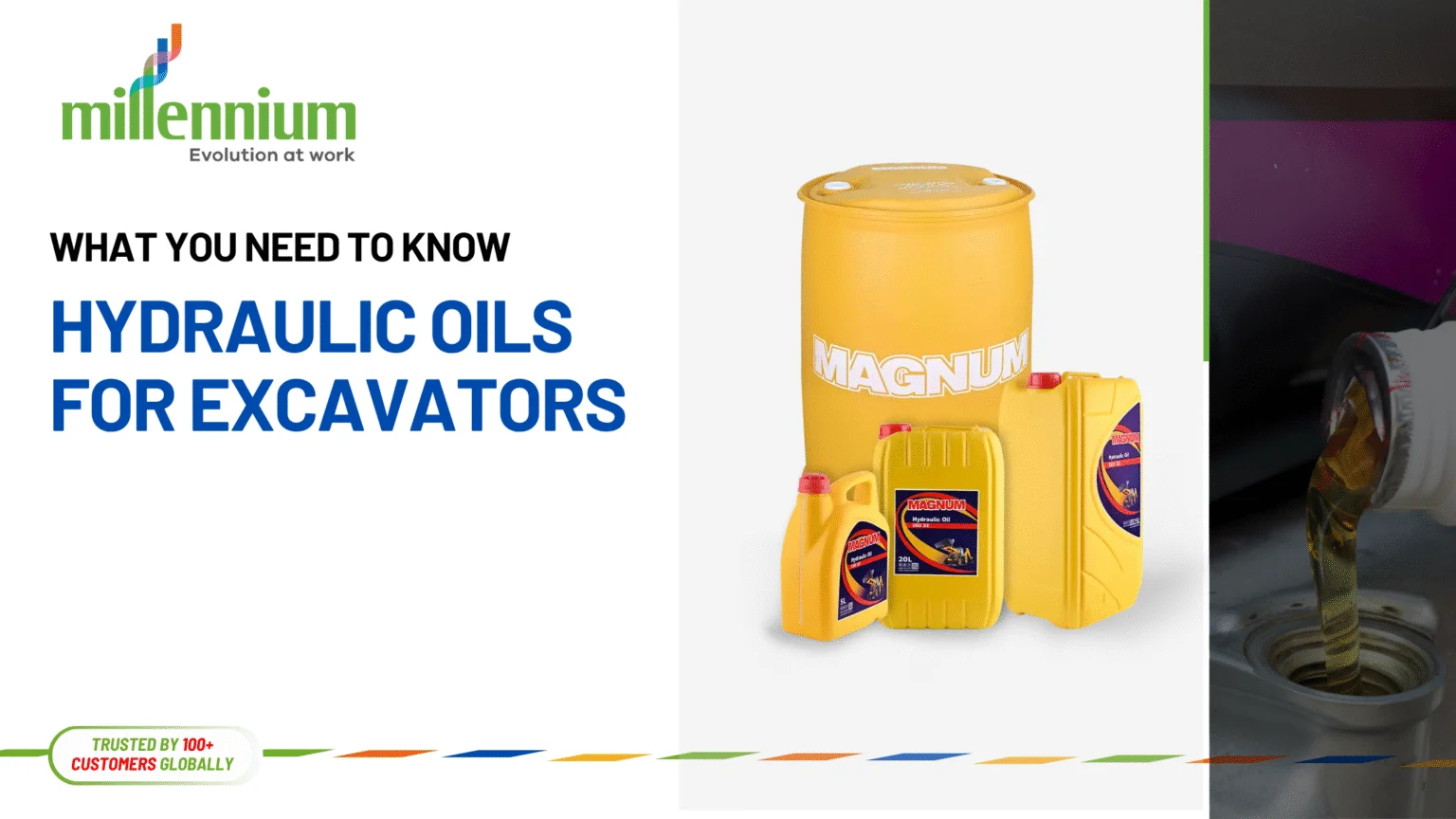
Excavators are designed to handle some of the toughest tasks in construction, mining, and infrastructure development. From precise trenching to heavy lifting and continuous earthmoving, their performance depends on a powerful and responsive hydraulic system. At the center of this system is hydraulic oil, a critical working fluid that directly affects efficiency, reliability, and machine lifespan. Understanding how hydraulic oil functions and how to choose the right grade is essential for anyone responsible for excavator operation or maintenance.
Role of Hydraulic Fluids
Hydraulic oil serves as the energy carrier within an excavator. It transfers force generated by the hydraulic pump to cylinders and motors, enabling controlled movement of the boom, arm, bucket, and swing mechanisms. Smooth and accurate machine response relies heavily on the quality and condition of this fluid.
Beyond power transmission, hydraulic oil provides continuous lubrication to internal components such as pumps, valves, pistons, and bearings. These parts operate under high pressure and tight tolerances. A proper lubricating film reduces friction, prevents metal-to-metal contact, and limits wear that could otherwise lead to costly failures.
Hydraulic fluids also play a major role in temperature regulation. Excavators often operate for long hours under heavy loads, producing heat within the hydraulic circuit. The oil absorbs this heat and carries it to coolers, helping maintain stable operating temperatures and preventing oil breakdown.
Another vital function is system protection. Quality hydraulic oils contain additives that resist oxidation, prevent corrosion, and control foam formation. They also help keep contaminants suspended until they are captured by filters. This is especially important on dusty construction sites or in humid outdoor environments where contamination risk is high.
In short, hydraulic oil is not just a lubricant—it is a multifunctional fluid that keeps the entire excavator system working efficiently.
Choosing the Correct Viscosity Ratings
Viscosity refers to the thickness or flow resistance of hydraulic oil, and it has a direct impact on excavator performance. Selecting the correct viscosity is one of the most important decisions in hydraulic system maintenance.
If the oil is too thin, it may flow easily but fail to maintain adequate pressure and lubrication at operating temperatures. This can lead to internal leakage, reduced efficiency, and accelerated component wear. On the other hand, if the oil is too thick, it can restrict flow, cause sluggish machine response, increase energy consumption, and make cold starts difficult.
When choosing viscosity, consider:
-
Ambient temperature where the excavator operates
-
Normal hydraulic system operating temperature
-
Load severity and duty cycle
-
Manufacturer’s viscosity recommendations
Correct viscosity ensures consistent pressure, smooth control, and efficient power transmission. It also helps reduce stress on pumps and motors, improving overall system reliability.
Why Are ISO 46 and ISO 68 Most Suitable?
ISO viscosity grades provide a standardized way to classify hydraulic oils based on their flow characteristics. Among these grades, ISO 46 and ISO 68 are the most widely used for excavators due to their versatility and reliability.
ISO 46 Hydraulic Oil
ISO 46 is commonly used in moderate climate conditions. It offers a balanced combination of good flow properties and sufficient film strength. This grade allows for quick hydraulic response, stable pump operation, and effective lubrication during normal operating temperatures.
ISO 46 is typically recommended for:
-
General construction excavators
-
Equipment operating with varying workloads
-
Machines exposed to mild to moderate ambient temperatures
ISO 68 Hydraulic Oil
ISO 68 has a higher viscosity and is better suited for hot climates or heavy-duty operations. It maintains a stronger lubricating film at elevated temperatures, providing added protection for components under continuous or high-load conditions.
ISO 68 is often preferred for:
-
Large excavators working long hours
-
Mining and quarry operations
-
High-temperature environments
Both grades are compatible with modern hydraulic systems, seals, and filtration systems. The choice between ISO 46 and ISO 68 should be based on operating temperature and workload rather than machine size alone.
MAGNUM Product Fit: Attributes and Advantages of MAGNUM Hydraulic Fluids
MAGNUM Hydraulic Fluids are developed to meet the demanding requirements of excavators operating in diverse conditions. Formulated with high-quality base oils and advanced additive technology, MAGNUM products are designed to deliver consistent performance and long-term protection.
Key Attributes of MAGNUM Hydraulic Fluids
-
Excellent anti-wear properties to protect pumps, valves, and actuators
-
High viscosity index for stable performance across temperature changes
-
Strong oxidation resistance to reduce sludge and varnish formation
-
Effective corrosion and rust protection for outdoor and harsh environments
-
Good demulsibility, allowing water to separate easily from the oil
Advantages for Excavator Operations
MAGNUM Hydraulic Oils help maintain smooth and precise hydraulic response while reducing internal leakage and component stress. Their thermal stability supports extended oil drain intervals, lowering maintenance frequency and operating costs. By keeping hydraulic systems cleaner and more stable, MAGNUM fluids contribute to longer component life and improved machine uptime.
Available in ISO 46 and ISO 68 grades, MAGNUM Hydraulic Fluids are suitable for both standard construction applications and demanding heavy-duty excavator operations.
Conclusion
Hydraulic oil selection is a critical factor in excavator performance and durability. Understanding the role of hydraulic fluids, choosing the correct viscosity rating, and selecting trusted grades like ISO 46 and ISO 68 helps ensure efficient operation, reduced wear, and lower maintenance costs.
With high-performance solutions such as MAGNUM Hydraulic Fluids, excavator operators can confidently protect their hydraulic systems and maintain reliable, efficient performance even in challenging working conditions.
Leave a Reply