
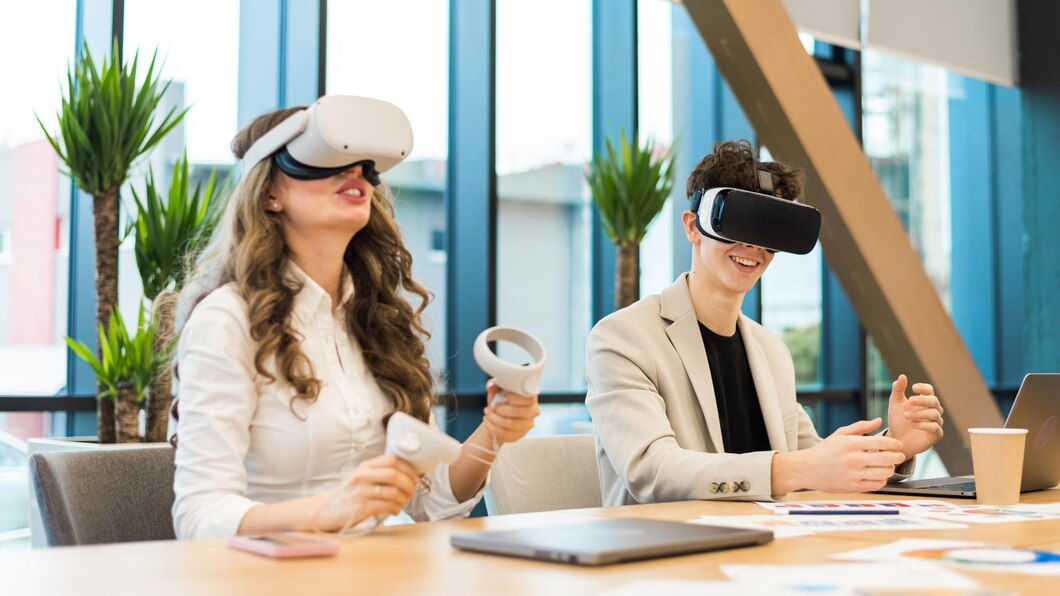
Real estate markets around the globe are constantly shifting. Traditional sales techniques are not enough for closing large deals anymore. VR in real estate is a must-have. Immersive technology offers three main benefits for developers, brokers, and large real estate firms. These benefits are lower costs, higher sales volumes, and a wider global reach.
Competition is no longer local; instead, it has gone digital and immersive. Decision-makers now focus on efficiency instead of participation in a field. This makes using a Hyper Realistic Metaverse Platform a wise choice, not an extravagant one. Now look at the article on how virtual reality in real estate is changing property sales. Your company should consider this as a key benefit of immersion.
Property Showcases Have Evolved From 2D to XR Display
The conventional way of marketing properties relies on pictures and two-dimensional floor plans to attract potential buyers. Nevertheless, such approaches fail to establish an emotional bond. The emergence of Virtual Reality (VR), Augmented Reality (AR), and Mixed Reality (MR) has caused a significant shift in the real estate sector. These are new tools that have occupied visualization gaps.
Developers can showcase properties before construction by using VR In Real Estate to show prospective investors. Sales departments gain an advantage by inviting investors into a virtual environment. This is better than waiting for a sample flat to be built. This role-playing method allows developers to:
- Buyers will learn to see the real sizes and ceiling heights that photos cannot show.
- Allowing clients to instantly make adjustments to their flooring materials or wall colors during a tour.
- Showing the property’s relationship with its surroundings, including sunlight patterns and local views.

Why VR In Real Estate Makes Financial Sense?
At the core of any enterprise lies its bottom line, and VR in real estate is no different. Recent industry reports show that listings with virtual tours get more interactions. They sell 31% faster than listings without tours.
1. Significant reduction of operating costs
Physical staging can be costly. Renting furniture, hiring interior designers and maintaining a sample unit all add up to thousands of dollars in expenses. With the Hyper Realistic Metaverse Platform, you can recreate any property online for much less money.
2. Compressing the Sales Cycle
VR in Real Estate solves this problem. An interactive tour can happen from an office or a home in minutes. This shortens the process from days to weeks. Sales teams can then focus on qualified leads who have researched a property.
3. Sustainable and Modern Branding Strategies
Today when sustainability must be taken seriously as an imperative for corporate success. Reducing carbon footprint by decreasing visits to locations is of great benefit to modern consumers with environmental concerns. By becoming a leader in XR In Real Estate solutions, companies can show they are tech-focused. This will attract younger investors and homeowners who appreciate technology.
Overcoming Geographical Barriers with Virtual Reality In Real Estate
Politicizing geography has emerged as one of the most intriguing business cases. From luxury developers and commercial businesses vying to attract international investors to other escapist ventures.
Virtual Open Houses can now be held using the aid of AR In Real Estate. Users from different continents can tour the property as a group. This VR feature in real estate allows customers in London to discuss houses in Dubai. They can talk with consultants located in Singapore. They can do all this in one virtual version of a building!
Delivering an immersive Hyper Realistic Metaverse Platform experience will convince the buyer that the property is worth purchasing. Expanded reach increases potential buyers and increases competitive bidding on assets for sale.
Strategic Implementation: Integrating Virtual Reality into the Sales Funnel
Companies should use VR in real estate to fully benefit from its potential. They should include it at every step of the buyer journey
- Awareness Stage:
360-degree interactivity advertising on social media to interrupt scrolling.
- Consideration Stage:
Users can take virtual reality tours of real estate properties. This allows them to explore every part of a space. They can check out utility rooms and balconies too.
- Decision Stage:
After choosing customization options and signing digital contracts in a Hyper Realistic Metaverse Platform, final decisions must be made. Contracts should be signed digitally in that same environment.
Technology has been simplified for easy use by companies. Customers can access it through web applications, mobile applications, and VR devices. This allows businesses to connect with their clients regardless of their location.

Future-Proofing Your Portfolio with VYUG Metaverse
VYUG Metaverse stands out as an industry leader in immersive technology and can assist your organization with digital transformation.
VYUG Metaverse is more than a platform; it’s a whole ecosystem, striving to drive the next wave of VR in Real Estate. By providing Hyper Realistic Metaverse Platform services, it enables developers and real estate professionals to create digital twins that cannot be distinguished from reality.
With VYUG’s advanced XR In Real Estate solutions, businesses can:
- Virtual introductions hosted in an unlimited online space.
- Create 3D showrooms that serve as 24/7 sales offices.
- Establish trust among buyers using high-fidelity rendering and interactive physics.
VYUG Metaverse offers the tools and ideas you need to make your brand stand out online. Moving to this platform is a wise choice for your business. It can help you cut costs. It can also attract global investors. Additionally, it allows you to create unique shopping experiences.
Leave a Reply