
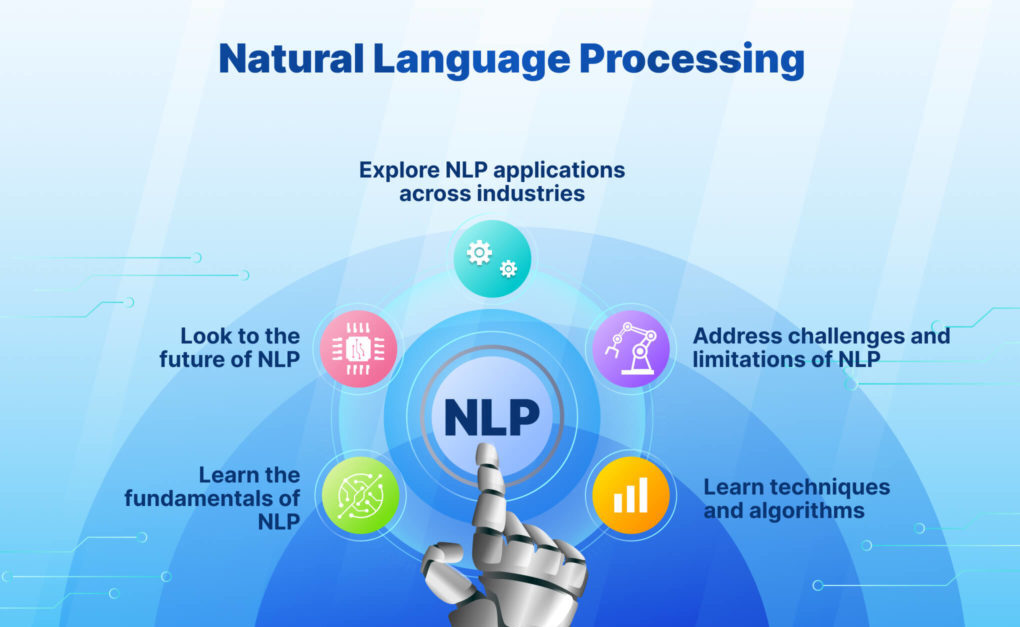
The gaming industry has evolved far beyond simple graphics and gameplay mechanics. Today, players expect immersive worlds, responsive characters, and personalized experiences. One of the key technologies enabling this transformation is Natural Language Processing (NLP).
NLP, a branch of artificial intelligence, allows machines to understand, interpret, and respond to human language. In gaming, this technology helps developers create interactive dialogue, intelligent NPCs, voice commands, and even player sentiment analysis. By leveraging NLP, game developers can significantly enhance engagement, realism, and personalization, making games more enjoyable and compelling.
What Is Natural Language Processing in Gaming?
Natural Language Processing is a subset of AI that deals with understanding human language. In games, it allows computers to analyze text and speech inputs from players and generate meaningful, context-aware responses. Unlike traditional scripted dialogues, NLP can interpret a wide variety of inputs, making interactions feel more natural and immersive.
For example, instead of selecting from a fixed set of dialogue options, players can type or speak freely to a character, and the game responds intelligently based on the context. This creates a dynamic and engaging experience, keeping players invested in the story and gameplay.
Enhancing Player Interaction
Player interaction is at the heart of modern gaming. By integrating NLP, developers can make Non-Playable Characters (NPCs) more responsive and realistic. NPCs can understand player queries, react appropriately, and even remember past interactions to provide personalized experiences.
Games with rich storylines benefit immensely from NLP. Players can engage in meaningful conversations with characters, explore multiple story paths, and receive unique outcomes based on their choices. This increases replay value and strengthens player immersion, as the game world feels alive and reactive.
Voice Commands and Speech Recognition
Voice-controlled gaming has become increasingly popular, especially with the rise of smart assistants and VR/AR platforms. NLP powers these voice interactions by recognizing player commands and converting them into in-game actions.
For instance, a player can instruct their character to perform complex actions using natural language, such as “Find a safe path through the forest” or “Trade resources with nearby villagers.” NLP algorithms interpret these instructions, enabling smooth, intuitive gameplay without relying solely on traditional controllers.
Voice interactions also make games more accessible for players with disabilities, providing inclusive gameplay options for a wider audience.
Sentiment Analysis for Player Engagement
Another way NLP enhances player experience is through sentiment analysis. By analyzing chat logs, voice inputs, or in-game text, developers can gauge a player’s mood and emotional state.
This data allows the game to adapt dynamically. For example, if a player appears frustrated, the game can offer hints, reduce difficulty, or provide motivational messages. Conversely, if a player is enjoying a particular activity, the game can introduce new challenges or rewards to maintain engagement.
Sentiment analysis ensures that the gaming experience remains personalized, adaptive, and emotionally intelligent, fostering a deeper connection between the player and the game.
Dynamic Storytelling and Procedural Content Generation
Procedural content generation is a growing trend in the gaming industry, and NLP plays a crucial role in it. By analyzing player inputs, preferences, and behavior, NLP-driven systems can generate dialogues, quests, and storylines that are unique to each player.
This creates a highly personalized experience where no two players have the same journey. Games like RPGs and adventure titles benefit the most from this technology, offering infinite story variations and emergent gameplay experiences.
Dynamic storytelling not only increases engagement but also encourages replayability, as players are motivated to explore alternative storylines and outcomes.
Improving Multiplayer Interactions
In multiplayer and online games, communication between players is critical. NLP can filter chat messages to detect toxicity, harassment, or inappropriate content, creating safer gaming communities.
Additionally, NLP can facilitate real-time translation for global player bases, breaking language barriers and fostering collaboration between players from different regions. This makes multiplayer experiences more inclusive, smooth, and enjoyable.
Challenges in Implementing NLP in Games
While NLP offers many advantages, integrating it into games is not without challenges. Real-time processing of text and speech requires significant computational resources. Handling diverse languages, dialects, and slang adds another layer of complexity.
Moreover, generating contextually accurate responses in dynamic game environments demands robust AI automation agency trained on extensive datasets. Developers must balance performance, accuracy, and responsiveness to ensure that NLP features enhance rather than hinder gameplay.
Future of NLP in Gaming
The future of NLP in gaming is promising. With advances in AI, deep learning, and large language models, games will become even more responsive, immersive, and personalized. Players may interact with fully intelligent NPCs capable of reasoning, remembering past events, and engaging in natural conversations that rival human interaction.
Integration with VR and AR will make voice and text interactions even more intuitive, creating highly immersive virtual worlds where players can communicate naturally with the environment and other characters.
Conclusion
Natural Language Processing is transforming the way players interact with games. From dynamic storytelling and intelligent NPCs to voice commands and sentiment analysis, NLP enhances immersion, personalization, and engagement.
For game developers, leveraging NLP means creating richer, more interactive worlds that respond intelligently to players’ choices and emotions. As the technology continues to evolve, we can expect games that feel more lifelike, adaptive, and emotionally engaging than ever before.
Leave a Reply